Why FEAR Triggers Stress Response, the Fight, Flight Or Freeze Response. And why the degree of your stress response matches your level of fear.
When FEAR Is Real
FEAR is our natural response to danger. So in a life-threatening situation, the physiological stress response symptoms you experience are there to help keep you alive.
The surge of stress hormones increased heart rate and blood flow as well as dilated pupils. Help us be alert, focused, run fast and strong. That is why so many people are reported at being able to push past their limits in extreme situations.
But the reality is most of our every day fears never happen in-fact research suggest out of the 6,000 – 60,000 thoughts we have in a day 70-80% are actually negative thoughts, your unconscious fears playing out all sorts of stories in your head.
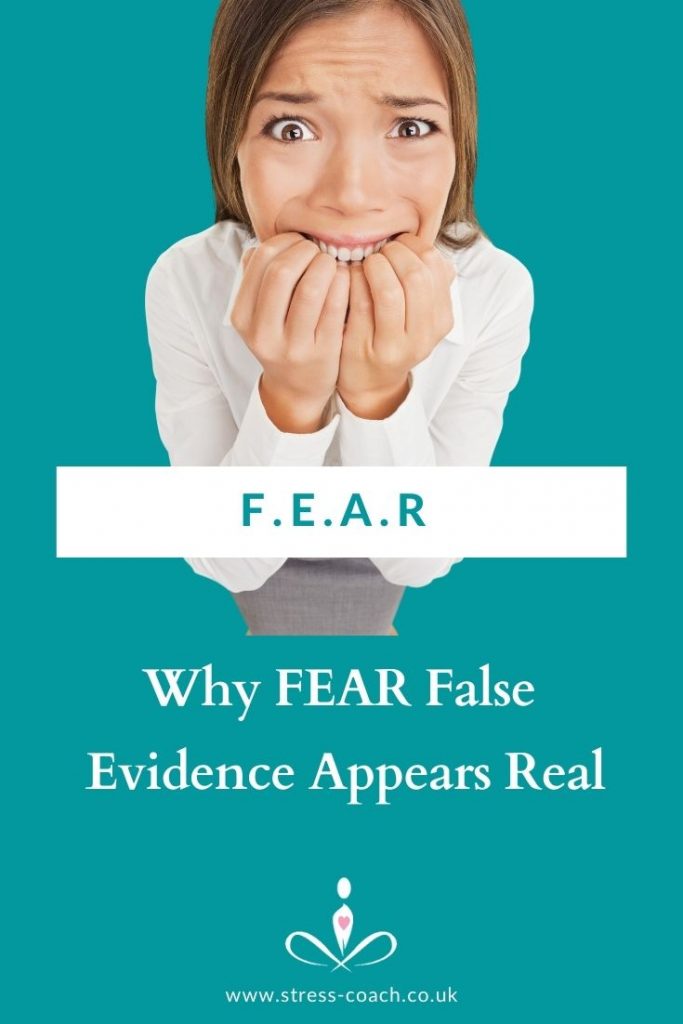
False Evidence Appears Real?
F.E.A.R an acronym used to describe self-generated fear or stress. The biggest cause of the STRESS epidemic today. False Evidence Appearing Real, is our fears unsubstantiated in the present. It is triggered by what if’s.
So most of your anxiety and fears today are actually a physiological symptom of our MIND’S perception of what may happen. Not what is actually happening. Anxiety around what may happen in our relationships, money, work, health, family.
Typical scenarios include maybe believing you might get fired at work if you get in late. Now you may never be late and the reality of that actually happening may not be true. But your physiological response, your symptoms to this belief is real. So much so your mind has triggered the Fight Or Flight Survival Response.
So what is the realy difference between anxieties and fears?

Difference between FEAR and ANXIETY
Fear triggers an innate survival response, a physiological change in mind and body that is necessary for survival. Increased heart rate, dilated pupils…all preparing the body to Fight Or Flight from danger.
Anxiety tends to trigger vaguer unpleasant symptoms like butterflies in the stomach. The symptoms are not specifically related to an exact specific threat but a generic possibility that something may happen. That is why many people who suffer from chronic anxiety become generally negative and fearful of a wide range of everyday events. Than those with stress triggered by specific events.
Top Tips To Let Go Of Fear F.E.A.R.
Face your Fears
Face your fears but don’t let them control or disable you. When you recognise your symptoms are just symptoms. You lower the power and suffering it has over you.
Be More In The Moment
Learn how to be in the moment, just be. The more you can be fully in the present moment, the less your mind wanders into the what if’s. The right type of meditation and mindfulness can help you be more calm, relaxed, more in the moment.
Become Stress Resilient
Learn how to manage and reduce your stress. Learn stress management strategies that improve your mental and emotional wellbeing; build good stress resilience
Learn How To Relax
Learn how to relax, too many people have forgotten how to relax, fully relax and switch off the mind. Learn how to switch off and relax deeply, the relaxed response will move you off and away from the stress response. Bring your mind and body back into balance and honeostasis.
Become Mindful Of Your Thoughts And Patterns
Be mindful of beliefs and conditioning that are triggering anxiety and stress. The more you recognise key events or situations that tend to trigger specific fears, anxieties or stressors, the easier it is to address them.
Heal Your Trauma
It is important to address and heal old trauma and wounding that is reinforcing negative or fearful thought patterns. Inner Child Work is highly effective at releasing old distorted fears. It can help us trust more in life. I share more in this video below
Facing Your Biggest Fears Of The Shadow Child

Healthier Boundaries
Healthier boundaries are an important aspect of good mental wellbeing, this includes detaching or removing yourself from unhealthy situations that unnecessary anxiety and stress.
Too many of us stick far too long in situations that are extremely unhealthy for our well-being. Whether that is a work environment, an extremely destructive or toxic relationship. Learn how to disengage or move on.
Learn Why Your Fears And Worry Can Lead To Chronic Anxiety Cycle